

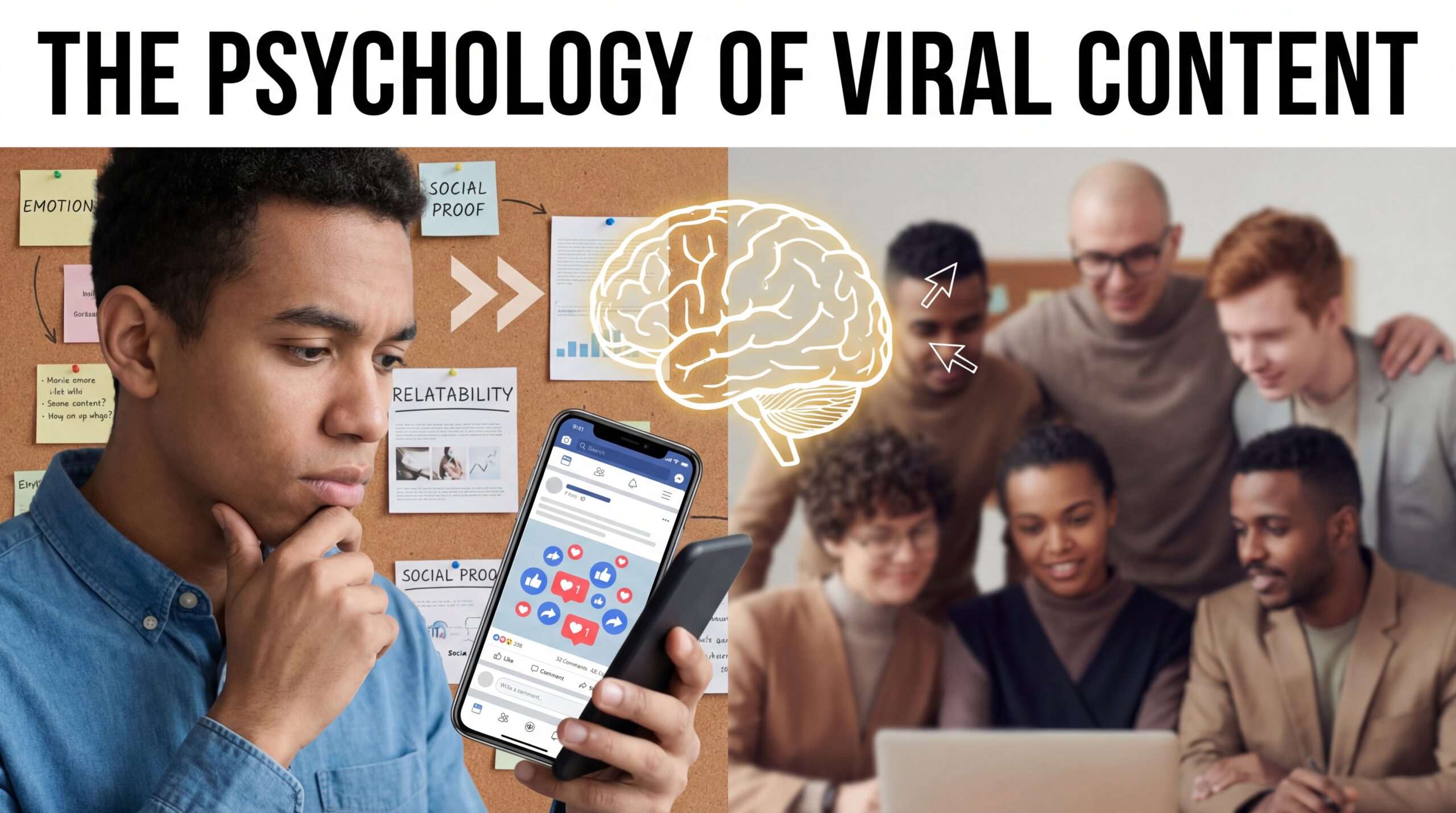
Let’s get one thing straight before we start romanticizing virality:
most viral content isn’t “lucky.”
And it’s definitely not random.
It’s engineered—sometimes intentionally, sometimes instinctively—around very old, very human psychological triggers. The same mental shortcuts that helped our ancestors survive now decide whether a tweet explodes, a reel crosses a million views, or a blog post dies quietly with three pity likes (one of them yours).
I’ve spent years watching content spread online—some of it smart, some of it dumb, some of it genuinely concerning—and one pattern keeps repeating: people don’t share information, they share emotions.
Everything else is decoration.
This article isn’t another surface-level “post consistently and use hooks” guide. You already know that. We’re going deeper—into the psychology that makes content contagious, uncomfortable, irresistible, and sometimes impossible to ignore.
Not theory.
Not textbook fluff.
Real human behavior.
Virality Is a Mirror, Not a Megaphone
Here’s an uncomfortable truth most creators avoid:
viral content doesn’t change people—it reveals them.
What spreads online is a reflection of what people already fear, desire, envy, believe, or secretly think but don’t say out loud. Platforms didn’t invent this behavior. They just removed the friction.
People shared gossip in villages.
They passed rumors in markets.
They told exaggerated stories around fires.
Social media just sped it up.
When something goes viral, it’s not because it’s objectively “good.” It’s because it aligns perfectly with the way human brains process information under emotional load.
And that brings us to the first—and most misunderstood—principle.
1. Emotion Beats Logic Every Single Time
If logic made things viral, nutrition labels would outperform conspiracy videos.
They don’t.
Content that spreads fastest usually triggers high-arousal emotions:
- Anger
- Awe
- Fear
- Shock
- Validation
- Moral outrage
- Hope (rare, but powerful)
Low-arousal emotions like calm, mild satisfaction, or polite interest don’t travel far. They’re nice—but they don’t compel action.
When someone shares a post, they’re not thinking:
“This is statistically accurate.”
They’re thinking:
“This made me feel something—and I want others to feel it too.”
That’s why:
- Outrage spreads faster than nuance
- Extreme opinions outperform balanced takes
- Emotional storytelling beats raw facts
It’s also why boring-but-useful content struggles unless it’s wrapped in emotion.
Information alone is forgettable. Emotion is sticky.
2. Sharing Is a Social Signal (Not a Selfless Act)
People like to believe they share content to “help others.”
Sometimes they do.
But most of the time, sharing is identity performance.
Every repost silently says:
- This is what I believe
- This is who I am
- This is the side I’m on
- This is how I want to be seen
Think about it:
- Political posts = moral positioning
- Educational threads = intelligence signaling
- Motivational quotes = self-image reinforcement
- Dark humor memes = “I’m different, not sensitive”
Viral content gives people a chance to broadcast their values without writing a word themselves.
That’s powerful.
And it explains why content that aligns with group identity spreads like wildfire, while neutral content floats unnoticed.
3. The Brain Loves Simplicity (Even When Reality Is Complex)
The human brain is lazy—not stupid, lazy.
It’s constantly scanning for:
- Shortcuts
- Patterns
- Clear villains and heroes
- Easy explanations
That’s why oversimplified narratives win.
“Hard work guarantees success” spreads better than
“Structural inequality + timing + privilege + luck + effort influence outcomes.”
The second one may be accurate.
The first one feels good.
Viral content often succeeds because it compresses complexity into digestible emotional chunks. It gives the brain closure. Even false closure feels better than uncertainty.
That’s also why:
- Hot takes outperform long analyses
- Absolutes beat nuance
- Strong framing beats careful wording
People don’t share what’s most correct.
They share what’s most clear.
4. Curiosity Gaps Hijack Attention (But Don’t Overuse Them)
You’ve seen this trick:
“I wish I knew this earlier…”
“Nobody talks about this…”
“This changed everything…”
These work because they exploit a psychological itch called the curiosity gap—the discomfort of not knowing something that feels important.
When done right, curiosity pulls people in naturally.
When abused, it turns into clickbait and destroys trust.
The difference?
- Honest curiosity invites exploration
- Manipulative curiosity breeds resentment
The brain doesn’t mind being teased.
It hates being tricked.
That’s why sustainable viral creators eventually shift from cheap hooks to earned intrigue—content that genuinely delivers after pulling attention.
5. Familiarity + Surprise = Shareability Sweet Spot
Pure novelty is confusing.
Pure familiarity is boring.
Viral content lives in the tension between the two.
Think of it like this:
- Familiar enough to feel safe
- Surprising enough to feel worth sharing
A meme works because you recognize the format—but the punchline twists it.
A viral opinion works because you’ve thought it before—but never said it that way.
Your brain loves saying:
“I already knew this… but wow, that’s new.”
That mental click is addictive.
Creators who understand this don’t chase trends blindly—they remix what people already understand with a new angle, tone, or framing.
6. Fear and Outrage Travel Faster Than Joy (Unfortunately)
Let’s not sugarcoat it.
Negative emotions spread faster online than positive ones. This isn’t because people are evil—it’s because fear was once essential for survival.
Your brain is wired to prioritize:
- Threats
- Warnings
- Violations of fairness
- Moral danger
That’s why:
- “This will ruin your future” spreads faster than “This might help you”
- Scandals outperform success stories
- Rage-bait farms exist (and make money)
The algorithm didn’t invent this.
It simply rewards what humans react to most intensely.
The danger? Chronic outrage fatigue.
Over time, people either:
- Become addicted to anger
- Or emotionally numb
Neither is healthy—but both are profitable.
7. Relatability Beats Perfection
Polished, flawless content often feels cold.
What people really connect with is recognition.
When someone thinks:
“This feels like me”
—they stop scrolling.
That’s why:
- Messy confessions go viral
- Honest failures outperform highlight reels
- Raw storytelling beats perfect production
Relatability triggers empathy, and empathy creates emotional alignment. Once aligned, sharing feels natural—almost automatic.
This is also why creators who dare to be imperfect often build stronger communities than those who try to look impressive.
8. Timing Is Psychological, Not Just Algorithmic
Posting time matters—but emotional timing matters more.
Content spreads when it matches the emotional climate of the moment:
- Economic stress → financial advice goes viral
- Social tension → opinionated content explodes
- Uncertainty → “guides” and reassurance spread
The same post can flop one month and explode the next—not because it changed, but because people did.
Great viral creators don’t just watch analytics.
They watch culture.
9. People Share What Helps Them Feel Less Alone
Here’s the part most marketers miss.
A lot of sharing isn’t about entertainment or education—it’s about connection.
People share content that:
- Validates their struggles
- Articulates feelings they can’t explain
- Makes them feel understood
When a post says what someone has been silently thinking, sharing it feels like relief.
That’s why lines like:
“You’re not lazy, you’re burnt out”
travel far.
They don’t just inform.
They comfort.
10. Virality Is Short-Term. Trust Is Long-Term.
One viral post can make you visible.
It won’t make you credible.
Audiences subconsciously track:
- Consistency
- Integrity
- Pattern of behavior
Creators who chase virality at all costs often burn out—or lose trust—because psychological manipulation without value has a short shelf life.
The most powerful content strategies balance:
- Emotional triggers and substance
- Bold opinions and accountability
- Reach and responsibility
Virality opens the door.
Trust keeps people inside.
Why Most “Viral Formulas” Fail
Because humans aren’t formulas.
You can copy hooks.
You can copy structures.
You can copy trends.
But psychology isn’t mechanical—it’s contextual.
What works today may fail tomorrow.
What works for one audience may repel another.
That’s why creators who truly understand virality don’t obsess over tricks—they obsess over people.
Their fears.
Their hopes.
Their insecurities.
Their unspoken thoughts.