

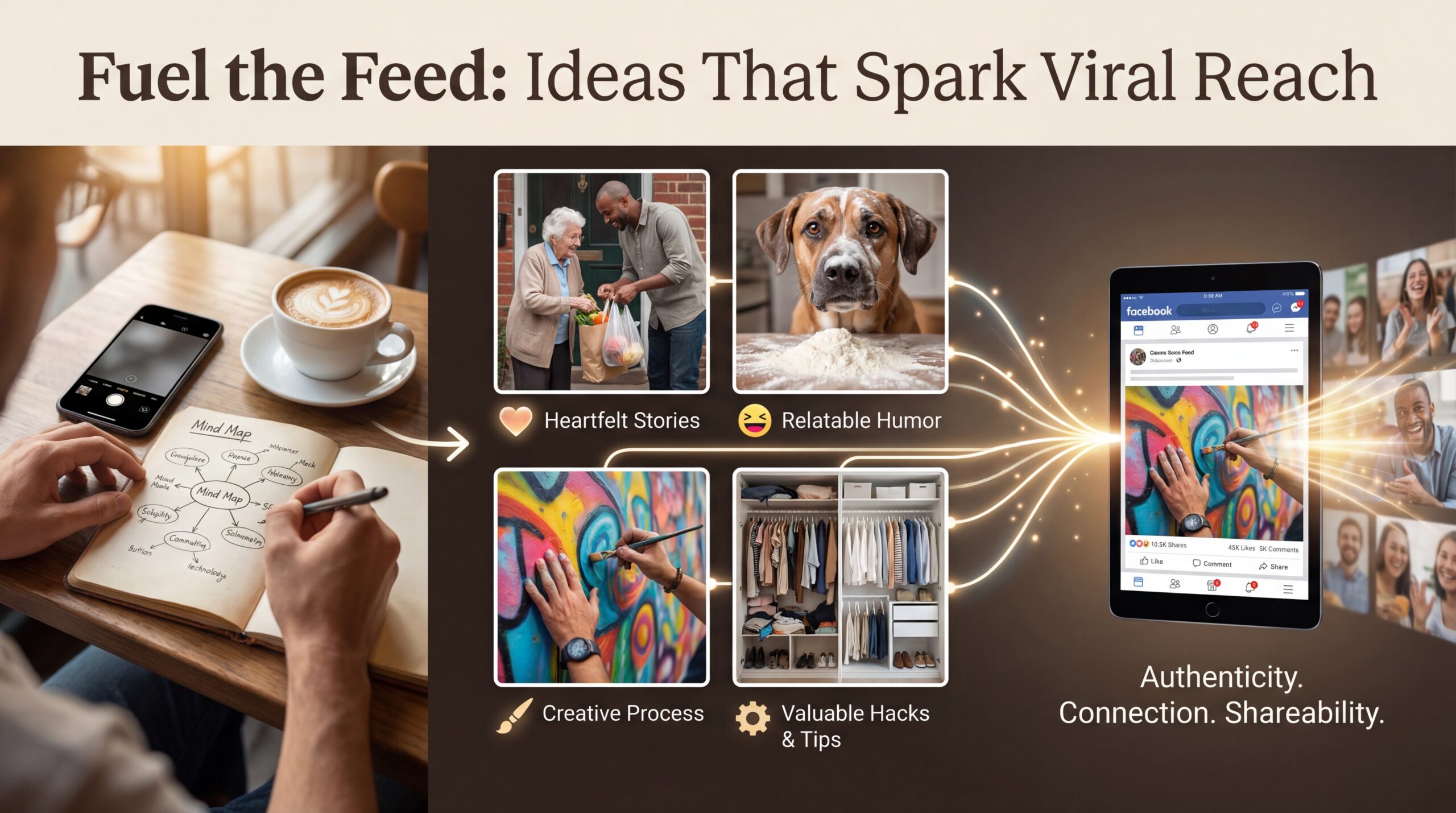
Facebook virality isn’t magic.
And it’s definitely not luck.
It’s pattern recognition mixed with emotional timing — and most people still get it wrong because they copy formats instead of understanding behavior.
I’ve seen pages with terrible design hit millions of views. I’ve seen “high-quality” content flop completely. The difference almost always comes down to one thing:
Did the content make people feel something strongly enough to stop scrolling — and then care enough to share?
Because on Facebook, sharing is the real currency. Not likes. Not views. Shares.
Below are the best content ideas that actually go viral on Facebook, broken down by why they work, not just what they look like. This isn’t recycled advice. This is how Facebook behaves now, not five years ago.
First: Understand Facebook’s Viral Psychology (This Matters)
Facebook is not TikTok.
People don’t open it to be entertained by strangers.
They open it to:
- Kill time
- Check on people they know
- Validate their opinions
- Feel understood
- Feel smarter, angrier, nostalgic, or morally right
That’s the emotional backdrop your content competes in.
Anything that goes viral on Facebook usually hits at least one of these triggers:
- Relatability
- Outrage
- Nostalgia
- Validation
- Identity signaling
- Emotional storytelling
Keep that in mind as you read what follows.
1. Relatable Life Struggles (Especially the “Unspoken” Ones)
This is Facebook’s bread and butter.
Posts that start with:
- “Nobody talks about…”
- “This is so accurate it hurts”
- “Am I the only one who…”
These go viral because they name experiences people feel but rarely articulate.
Examples that perform insanely well:
- Adult responsibilities nobody warned you about
- Financial stress masked as jokes
- Family expectations
- Career frustration
- Emotional exhaustion
Why it works:
People don’t just like these posts — they tag friends. And tagging is algorithm fuel.
If your content makes someone say, “This is literally us,” you’ve already won.
2. Opinionated Posts That Pick a Side (But Sound Human)
Neutral content dies on Facebook.
Strong opinions thrive — especially when they feel conversational, not preachy.
What works:
- “Unpopular opinion” posts (when they’re actually unpopular)
- Takes on work culture, relationships, parenting, money, society
- Moral gray areas, not obvious truths
What doesn’t:
- Corporate-sounding opinions
- Forced controversy
- Fake outrage
The trick is tone.
The best viral posts feel like something a friend would say during a long rant — not a debate stage speech.
People share opinions to signal identity. If your post gives them words they already believe but haven’t said out loud, it spreads.
3. Short Emotional Stories With a Clear Turning Point
Facebook users still love stories — but only when they move fast.
Long paragraphs? Risky.
Clear emotional arc? Powerful.
The best viral stories usually follow this rhythm:
- A simple, relatable setup
- A moment of tension or surprise
- An emotional payoff (hope, anger, irony, warmth)
Common themes:
- Kindness from strangers
- Unexpected life lessons
- Family moments
- Regret and realization
- Quiet wins, not flashy success
These stories work because they feel share-worthy. People want others to feel what they just felt.
4. Nostalgia Content That Feels Personal, Not Generic
Nostalgia crushes it on Facebook — but only when it’s specific.
Not:
“Remember the old days?”
But:
“Remember when phones had buttons and life felt slower?”
Better yet:
- Childhood routines
- Old school punishments
- Early internet moments
- School memories
- Pre-smartphone habits
Why it goes viral:
Nostalgia reduces stress. It gives people a shared memory — and shared memories are social glue.
Bonus points if the content subtly contrasts then vs now without lecturing.
5. “This Is So True” Screenshots & Text Posts
Design barely matters here.
Some of the most viral Facebook content is:
- Plain text
- Screenshot of notes
- Tweet-style statements
- Black text on white background
Why?
Because Facebook is a text-first emotional platform, even if it pretends to be visual.
The best-performing text posts usually:
- Are brutally honest
- Sound like internal monologue
- Use simple language
- Feel slightly uncomfortable
People share these not because they look good — but because they feel accurate.
6. Moral Dilemmas & “What Would You Do?” Posts
Facebook loves judgment. Let’s not pretend otherwise.
Posts that pose:
- Ethical questions
- Relationship dilemmas
- Parenting decisions
- Workplace conflicts
spark massive comment sections.
Why?
Because they invite people to:
- Defend their values
- Feel morally superior
- Tell personal stories
- Argue (politely or not)
The key is balance.
The situation must feel realistic — not exaggerated or clickbait.
If it feels like something that could actually happen, engagement explodes.
7. Soft Education That Makes People Feel Smart (Without Trying)
Educational content goes viral on Facebook only when it doesn’t feel educational.
Think:
- “Most people don’t know this, but…”
- “Nobody tells you this about…”
- “This simple explanation changed how I see…”
Topics that perform well:
- Psychology
- Money habits
- Human behavior
- Relationships
- Everyday science
- Social norms
The secret sauce is accessibility.
If someone can read it once and feel smarter immediately, they’ll share it.
8. Before-and-After Transformations (Beyond Just Looks)
Transformations aren’t limited to weight loss or makeovers anymore.
What’s going viral now:
- Mental health progress
- Lifestyle changes
- Career shifts
- Personal growth stories
- Financial recovery journeys
The transformation must feel earned, not staged.
People love proof of progress — especially when it’s messy, slow, and honest.
9. Culturally Relevant Humor (Local, Regional, Real)
Generic memes struggle on Facebook.
Culturally specific humor thrives.
This includes:
- Regional slang
- Cultural habits
- Family dynamics
- Social norms
- Generational differences
When people see themselves reflected accurately, they don’t just laugh — they share it with pride.
This is why local pages often outperform global ones despite smaller audiences.
Relevance beats reach.
10. “Hard Truth” Posts That Sting a Little
These are dangerous — but powerful.
Posts that say:
- “Nobody owes you…”
- “If you’re always tired, maybe…”
- “The reason you’re stuck isn’t…”
When done wrong, they feel preachy.
When done right, they feel honest.
The difference?
Empathy.
The best hard-truth posts criticize behavior, not people. They acknowledge struggle while still challenging mindset.
People share these because they feel like personal wake-up calls.
11. Comment-Bait That Doesn’t Feel Like Comment-Bait
Old-school “LIKE if you agree” doesn’t work anymore.
What works now:
- Open-ended questions
- “Which one are you?”
- “Tell me this didn’t happen to you”
- “Be honest…”
These prompts feel conversational, not manipulative.
And Facebook rewards comments heavily — especially early ones.
If your content invites natural conversation, the algorithm does the rest.
12. Real Photos With Real Stories (Not Stock Images)
Highly polished images underperform on Facebook.
What works better:
- Real faces
- Imperfect lighting
- Authentic moments
- Behind-the-scenes shots
Especially when paired with a strong caption.
Facebook users trust content that looks like it came from a real person’s phone, not a brand folder.
Authenticity is visual too.
What Most People Get Wrong About Facebook Virality
They chase formats.
Reels. Memes. Quotes. Videos.
Formats matter — but emotion matters more.
The algorithm doesn’t push content because it’s trendy.
It pushes content because people react to it meaningfully.
And meaningful reactions come from:
- Recognition
- Emotion
- Identity
- Story
Not polish.
A Practical Reality Check
If you want content that goes viral on Facebook:
- Stop trying to impress
- Stop copying viral posts word-for-word
- Start observing how people talk
Read comment sections. Watch what gets shared in private groups. Notice what people tag friends in.
That’s where real ideas come from.