
I remember my first real “digital failure.” I was fresh out of college, excited to start my dream job, and then—bam!—my lack of digital skills hit me like a truck. I couldn’t navigate basic software, my spreadsheets looked like a chaotic mess, and even sending professional emails felt like decoding hieroglyphics. It was embarrassing. But here’s the lesson: that one weakness almost cost me a career opportunity.
Fast forward a few years, and it’s clear: digital skills aren’t optional anymore. They are the currency of the modern workplace. Whether you’re a graphic designer, a teacher, a marketer, or even a tradesperson, the digital world has infiltrated every corner of our professional lives. Ignore it at your own peril.
1. What Are Digital Skills Anyway?
When people talk about “digital skills,” they often imagine coding, AI, or hacking into computers. The reality? It’s broader and more practical than that.
Digital skills include:
- Basic software literacy: Microsoft Office, Google Workspace, project management tools
- Online communication: Email etiquette, collaborative platforms like Slack or Teams
- Social media savvy: Understanding platforms for branding, networking, or marketing
- Data analysis: Using spreadsheets, understanding graphs, interpreting numbers
- Cybersecurity awareness: Recognizing phishing, protecting personal and company data
In short, if you can navigate, create, and communicate effectively in a digital environment, you have digital skills.
2. Why Every Job Now Requires Digital Skills
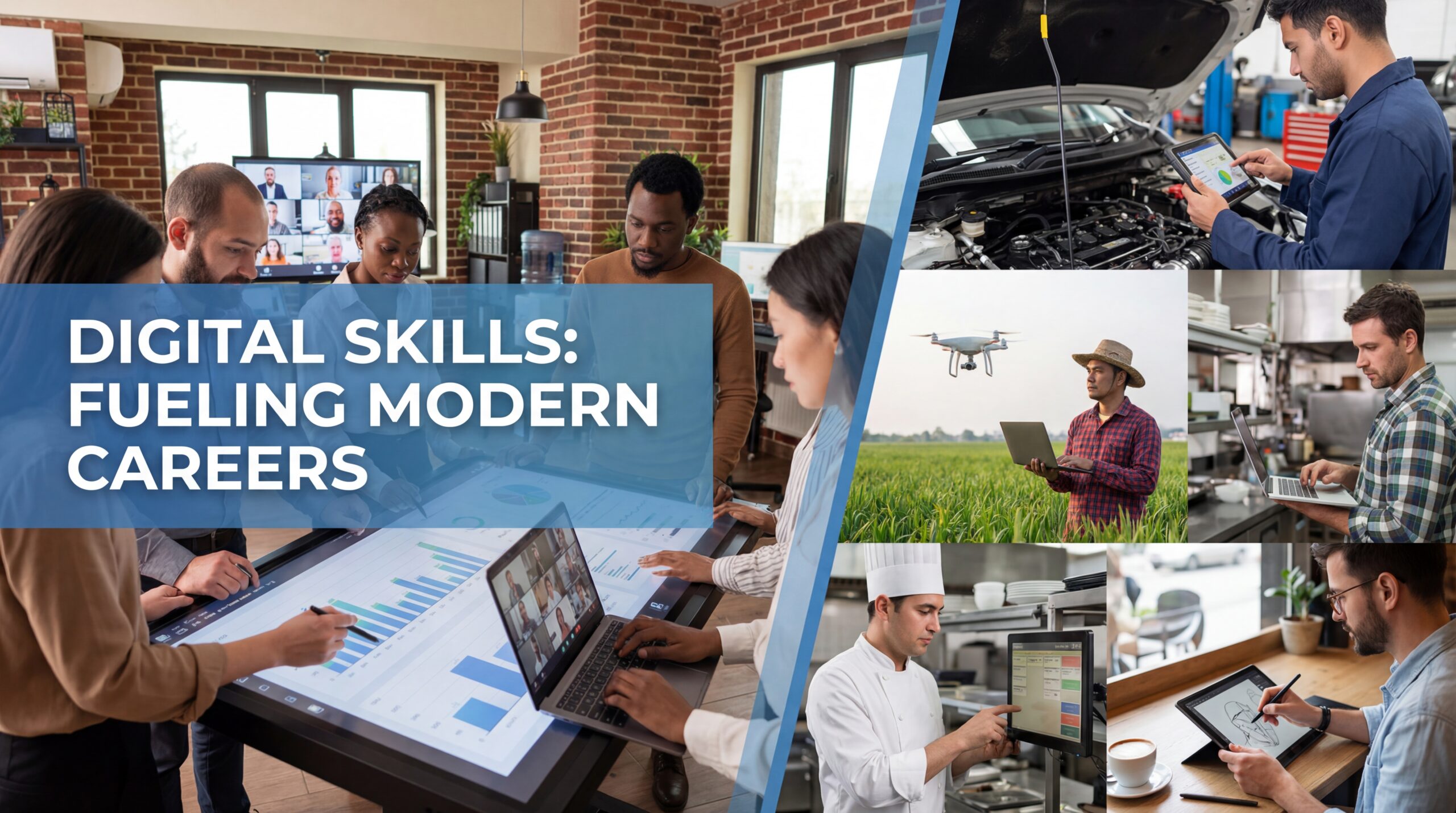
You might think, “I’m a plumber, a driver, or a chef—what does this have to do with me?” More than you think. Let me explain with some real examples.
- Chefs and restaurant managers: Digital skills allow you to manage online reservations, track inventory through software, and promote your business on social media. A chef who posts viral recipe videos can earn more recognition than one who doesn’t.
- Drivers and logistics: GPS, delivery apps, fleet management software—all require basic tech proficiency. A driver who understands digital tools is far more efficient.
- Teachers and educators: Online classrooms, digital grading systems, and interactive tools are now standard. Teachers without digital skills struggle to keep students engaged.
Even if your job is “hands-on,” your professional growth is increasingly tied to digital literacy.
3. Digital Skills Boost Efficiency and Productivity
Here’s a truth most employers won’t admit: they value efficiency above almost everything else. Digital skills make you faster, smarter, and more resourceful.
I’ve seen colleagues who could barely use Excel spend hours manually calculating reports, while others with solid digital skills automated everything in minutes. The result? Less stress, more output, and a reputation for reliability.
Automation tools, cloud storage, and online collaboration platforms aren’t just conveniences—they’re survival tools in a modern job market where every minute counts.
4. Adaptability in a Rapidly Changing Job Market
The digital world evolves at lightning speed. Remember when social media managers were rare? Now every brand, small business, and startup needs them. Even industries like healthcare, manufacturing, and construction are going digital with AI, IoT devices, and digital management systems.
Digital skills give you adaptability. They make you flexible in the face of change and position you to grab opportunities that others can’t. Think of it as a life jacket in a sea of constant technological evolution.
5. Digital Skills Are Key for Remote Work
The pandemic changed everything. Remote work is here to stay, and guess what? You can’t work remotely without digital skills.
- Video conferencing software (Zoom, Google Meet)
- Cloud collaboration tools (Dropbox, Google Drive)
- Time management apps (Trello, Asana)
Even a freelance graphic designer or a virtual assistant needs to communicate, collaborate, and deliver work online. Digital skills are no longer a bonus—they are a requirement.
6. Competitive Advantage in the Job Market
Here’s a blunt fact: candidates with strong digital skills are more likely to get hired and promoted. Why? Because companies want employees who can:
- Solve problems using technology
- Improve team efficiency
- Innovate and adapt to digital solutions
Imagine two applicants: one knows basic software and can adapt quickly to new tools; the other avoids tech. The first applicant will almost always get the edge, regardless of experience.
Digital skills aren’t just a “nice to have”—they are a differentiator in a crowded job market.
7. The Connection Between Digital Skills and Innovation
Let’s talk creativity. Digital skills aren’t just about efficiency—they enable innovation.
A marketing professional who understands analytics can identify trends and create campaigns that resonate. A teacher using digital tools can design interactive lessons that transform student engagement. Even a chef can experiment with social media content to build a personal brand.
Without digital skills, your potential to innovate is capped. You’re limiting yourself to old-school methods while the world accelerates around you.
8. Soft Skills + Digital Skills = Superpower
Here’s a nuance often overlooked: digital skills aren’t just technical. When paired with soft skills, they become a professional superpower.
- Communication: Digital tools enhance collaboration across teams, locations, and time zones.
- Problem-solving: Access to online resources and tools makes it easier to find creative solutions.
- Adaptability: Learning new software or platforms builds resilience and confidence.
Employers love people who combine emotional intelligence with digital proficiency. It’s a rare but highly valuable combination.
9. Upskilling Is Non-Negotiable
You can’t just learn digital skills once and stop. Technology evolves constantly. AI tools, cloud software, and emerging platforms are changing the workplace faster than ever.
- Online courses, tutorials, and webinars can help you stay ahead.
- Certifications in tools relevant to your field boost credibility.
- Experimentation and curiosity are as important as formal training.
The professional who commits to lifelong learning will always have an edge.
10. Digital Skills Promote Personal Branding
Here’s something most people ignore: your career is a personal brand, and digital skills amplify it.
- LinkedIn profiles, professional portfolios, and social media presence are critical for networking.
- Understanding SEO, content creation, and analytics allows you to showcase your work effectively.
- Even side projects can gain traction if you know how to leverage digital platforms.
In today’s job market, if you aren’t visible digitally, you might as well not exist professionally.
11. Digital Literacy Reduces Professional Anxiety
Let’s be honest: the fear of “not knowing tech” creates anxiety. Meeting invites, online dashboards, reporting software—it’s overwhelming if you don’t have digital confidence.
Learning digital skills reduces stress, builds autonomy, and gives you control. You stop waiting for colleagues to help with basic tech problems and start focusing on meaningful work.
12. Real-Life Examples
Let me give you a few stories to illustrate:
- Sofia, a teacher: She integrated online quizzes, Google Classroom, and interactive apps into her lessons. Student engagement skyrocketed, and she became the go-to educator in her district for digital learning strategies.
- Rahul, a small business owner: By learning social media marketing, he increased sales by 200% in six months. No external agency—just digital literacy and smart strategies.
- Maya, a marketing analyst: Mastered data visualization tools and predictive analytics, making her an indispensable asset. Promotions followed naturally.
The pattern? Digital skills unlocked opportunity, visibility, and growth.
13. Overcoming the Digital Skills Gap
Yes, there’s a gap. Many professionals feel intimidated by technology or assume it’s “too late” to catch up. That’s a myth.
Start small:
- Choose one skill per month—Excel, Canva, Slack, Python
- Apply it in your current role
- Seek feedback and iterate
Consistency beats intensity. Slowly, your digital competence compounds, opening doors you never imagined.
14. The Future Is Digital—No Exceptions
Automation, AI, and digital transformation aren’t trends—they are the new normal. Jobs that resist digital integration are disappearing. Jobs that embrace it are thriving.
From HR professionals using AI for recruitment to journalists analyzing big data for stories, digital skills define future career success. It’s not optional.
15. Conclusion: Invest in Yourself
If there’s a takeaway, it’s this: investing in digital skills is investing in your future. It isn’t just about career advancement—it’s about survival, confidence, and relevance in a modern job market.
Ignore them, and you risk being left behind. Learn them, and you position yourself for growth, adaptability, and opportunity.
So, start today. Open that Excel tutorial. Sign up for a coding course. Explore AI tools in your field. Every step forward strengthens your professional arsenal. In the digital era, your skills are your power—and the more digital fluency you have, the brighter your career path will be.